Don’t be selfish; spend your stimulus check (Monetary Policy)

The Federal Reserve has used every tool they have to incentivize spending and borrowing, measures that exceed their actions at any other point in history. Macroeconomic tools are like adjusting the throttle and turning the wheel on the Titanic—there is going to be significant lag before your speed and course adjusts, and by that time you may be trying to steer in a different direction. If you’ve ever driven a boat, you understand. The U.S. economy is the biggest boat ever built.


What happens if I don’t pay my mortgage? #cancelrent

As businesses start opening back up and people get back to work and money starts flowing again, the big questions are how quickly it happens and to what degree demand returns. As months pass, the number of unpaid mortgages is only going to increase, and forbearance can’t last forever. As consumers start spending again, their habits and preferences are going to be different. Some jobs are never going to come back, and other jobs may be created. We’re coming back to a different world than we left, and the math may not add up.

Playing not to lose (entrepreneurship)

We’re beating the virus, and it’s unclear how formidable of an opponent it is or ever was, but the worst thing that could happen at this point is for us to get overconfident and empty the bench too soon. Framed a different way, I’ve seen enough horror movies to know it’s a mistake to assume the serial killer you’re trapped in the house with is incapacitated, and letting your guard down—you will regret it. Rule #2: Double Tap.

Whoa, we’re halfway there (Q1 GDP)

If a lumberjack cuts down a tree and sells it to a carpenter, and the carpenter makes a rocking chair and sells it to Home Depot, and Home Depot sells it to a hipster who wants a rocking chair on his 4′ x 6′ apartment patio, the only sale counted in GDP is that final sale. It’s counted in “consumer spending”, which makes up ~67% of total GDP. If the carpenter had sold it to Cracker Barrel, it would have been counted in “business investment” (~18% of GDP). Who remembers the equation and what is coming next? C+I+G+(x-m)=GDP. If the Bureau of Economic Analysis bought the chair for their waiting room, it would be counted in “government spending” (~17% of GDP). And, finally, if Kim Jong Un bought the rocking chair for the DMZ, it would be counted in exports (~-5% of GDP; we import more than we export). Simple enough, right?

Stop washing your hands

You don’t have to be a general sending men into battle to actively weigh the value of human lives versus other objectives and goals. We could give every person who gets on every airplane a parachute, but it’s not worth the cost. We could ban pools, or double-down—why don’t we ban swimming entirely? It’s not worth the cost, that’s why.

China and the TikTok problem

This is how wars are waged, now. Data collection. Misinformation campaigns. I can hear all the teens screaming and scratching and clawing to keep their unfettered access to their hits of dopamine, justifying it as harmless fun. But what if it’s not? What if it’s the Trojan horse? Pause for a second and consider that TikTok could be weaponized. Is that impossible? If you say yes, it doesn’t prove anything other than you’re an addict and need help.

The NFL Draft: bad decisions and bad owners

First, consider the complications of the situations these 20-ish-year-old athletes are placed into. How good are their coaches? How healthy is the locker room morale? Who are they competing with to get on the field, and who is mentoring them, if anyone? Those things matter more than we can ever know, and I think this adds to the argument against our capability to predict human behavior. Since it’s impossible to measure any of those factors or even understand the number of variables at play, we just do what humans do best when faced with complexity: ignore it! If someone plays a lot and scores touchdowns, he’s great, and if someone doesn’t play a lot and doesn’t score touchdowns, he sucks.

Tradeoffs and opportunity costs

Because economists are trained to think in terms of opportunity costs, the line blurs between reality and what-could-have-been. As an example, let’s circle back to housing. If you live in your parent’s basement rent-free and have a job that pays you $40,000 per year, I would say not spending money on housing is, for all intents and purposes, the same as making ~$52,000 per year. Why? Because paying for housing takes up ~30% of the average Americans budget! Not paying for housing is no different than having a 30% higher income. This is the point in class where I would *politely* remind the sophomores that thinking of an exception to the general statement I just made does not mean you need to raise your hand and point it out.

What -$37.63 per barrel means for U.S. crude oil (Gov’t Subsidies)

President Trump attempted to slow down the crashing crude oil market by stating he plans to purchase 75 million barrels of oil to add to the Strategic Petroleum Reserve. This was a middle step, it’s not quite giving federal money away to U.S. oil companies to keep them afloat, but the government doesn’t really have any need to add to the reserves right now, either. Imagine you’re a kid with a lemonade stand and no one is buying your lemonade, then your dad comes out and buys half a gallon and puts it in the fridge.

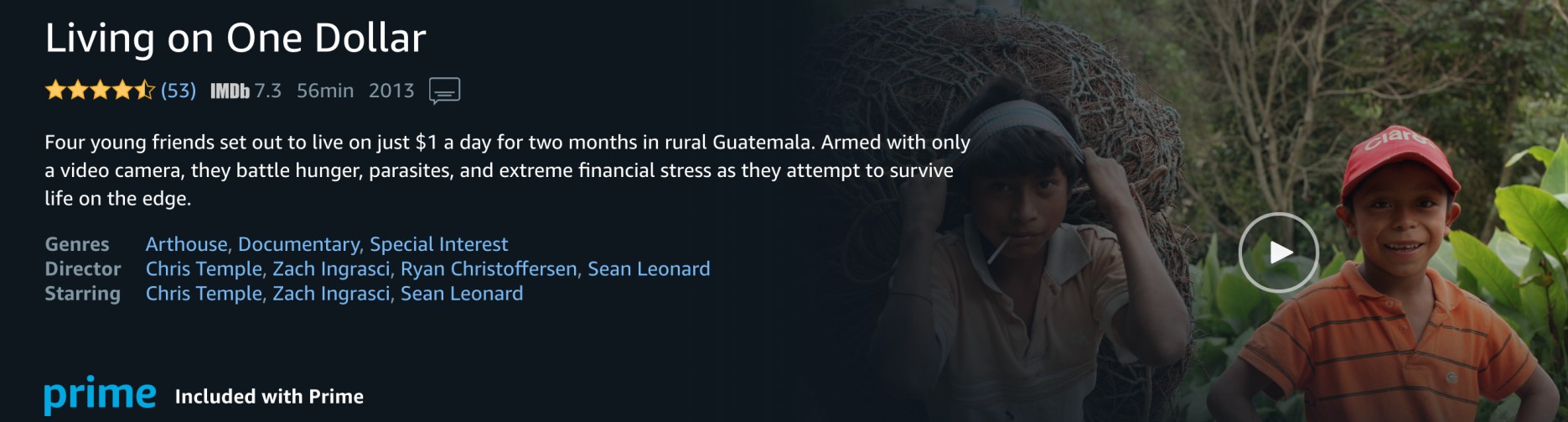
Living On One Dollar

Over 70% of our GDP is consumer spending, and it doesn’t account for human value or quality of life in the slightest. For example, let’s say a husband gets a promotion at work which allows the wife to stay at home with their children. That would be interpreted as a negative thing by GDP metrics! They are no longer spending money on childcare, and so on and so forth. Along the same lines, having your kids do chores around the house instead of hiring outside help decreases GDP.